John received clemency from President Trump on Jan. 20 2021. He is presently living in Philadelphis with his family.
I am a 69 year old first time nonviolent marijuana offender serving a sentence of two life terms plus 20 for a marijuana conspiracy that took place in the SF Bay area and Canada. I was charged with conspiracy and was the last person prosecuted and chose to go to trial.I was prosecuted and sentenced in the 11th Circuit Northern District of Florida.
At sentencing, Judge Maurice Paul stated that there were no victims. Even though there were no victims, I most certainly knew that marijuana was not legal and that I was breaking the law.
I am deeply sorry for my involvement and regret my life choices. These choices have caused untold pain and sorrow for those I love and those who love me.I have been incarcerated for this offense for twenty years and am no doubt approaching the twilight of my life.I was held for this offense for 41/2 years pretrial.
For the last 20 years I have attempted to build a prison resume that I can be proud of and to live my life with integrity and respect for others and model nonviolent conflict resolution. I have never had violence in my life and was originally drawn into the conspiracy in the 60s and 70s counter culture of the San Francisco Bay area.Throughout my 20 years of incarceration I have never had an infraction.
I believe I have been fortunate and blessed to continue to have the support of my entire family and extended family. They have all suffered because of my incarceration but my ex-wife and son have been able to overcome all the hardships and build successful lives in spite of the suffering caused by having an incarcerated husband and father.I deeply regret what they have gone through.My ex-wife will welcome me back.While I’ve been incarcerated she was able to complete her Ph.D. and secure a tenured position at a university in Pennsylvania.My son has an engineering degree from Columbia University.I am very grateful and proud that they have been able to have successful lives and still offer me support.
I beg for mercy, compassion and forgiveness and a chance for a second chapter in my life. Please consider my petition for commutation.
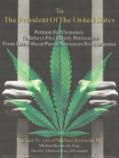
Please read the Group Petition for Commutation to for five elderly non-violent marijuana inmates serving sentences of Life Without Parole for selling marijuana. John Knock is one of these inmates included on the Petition.
Conspiracy to Import Life Conspiracy to distribute Life Conspiracy to Money Launder 20 years Two Life Terms plus Twenty
John did not have a plea agreement and went to trial. If you exercise your right to trial your sentence is usually multiplied six fold. Also charges are not dropped, but charges are added. This is the prosecutors power.
If you know of a non-violent first time marijuana only offender who has received a sentence of this magnitude please contact john knock 100 Hale Rd. Zanesville, Oh. 43701 e- mail johnknock@johnknock.com Also contact us if you know of any marijuana only non-violent offender with a life sentence
EXAMPLES OF SENTENCING DISPARITY AND CHARGING DISPARITY SENTENCES GIVEN TO HEROIN AND COCAINE KINGPINS COMPARED TO JOHN KNOCK
Ricky Donnell Ross sentenced to life in 1996 reduced to 20 - released in 2009 Kingpin - sold 2-3 million per day
Felix Gallardo sentenced in 1994 to 40 years Heroin and cocaine Kingpin case involved Camerana killing
Torrance Hill sentenced to 24 years in 2007 major cocaine Kingpin 9 million per month
Manuel Noriega sentenced to 40 years in 1992 released in 2007 - Kingpin 8 counts trafficking and money laundering
Manuel Felipe Salazar sentenced in 2008 to 30 years Worlds most significant cocaine Kingpin 14 million per week
EXAMPLES OF SENTENCING DISPARITY AND CHARGING DISPARITY SENTENCES GIVEN TO MARIJUANA ONLY NON-VIOLENT KINGPINS COMPARED TO JOHN KNOCK
Gregory Antonakos - arrested in 1998 released in 2004 Called Mastermind of multimillion Dollar Marijuana Ring
David S Brocklebank- sentenced in 2004 released 2008 Multi Ton Intrnational Drug Smuggler
Robert Colflesh - sentenced to 10 years in 1988 released in 1992 Called Worlds biggest Drug kingpin
Samuel Colflesh - sentenced to 10 years in 1988 released in 1992 Worlds biggest drug kingpin - with brother
Brian P Daniels - sentenced to 25 years in 1990 released in 2009 Largest seizure of marijuana in the world
Terry P Dee - sentenced in 1990 released in 1999 Master mind of drug ring
Sidney Marvin Lewis - became a fugitive in 1990- extradited from Isreal in 2003 pled to 25,000 tons hashish 2006 sentenced to 60 months - released 2007 Largest hashish seizure in the Northwest
Arthur Torsone - indicted in 1998 released in 2006 Called one of the Biggest Marijuana smugglers on the planet
Robert Tillitz - sentenced in 1990 to 30 years released in 10 years Major Marijuana Smuggler
Ciro Mancuso - sentenced to 9 years in 1995 released in 2000 Largest drug conspiracy in history
Howard Marks - sentenced to 25 years in 1988 released in 1996 Called Largest Smuggler of Marijuana in the World
Micahel Medjuck - sentenced to 24 years in 1991 released in 2004 Called Largest shipment ever seized by US agents
Brian O'Dea - sentenced to 10 years in 1991 released in Canada in 1993 Called Kingpin
Bruce Perlowin - sentenced in 1983 released in 1991 Called largest marijuana importer in history
Thomas Sherrett - sentenced to 20 years in 1994 released in 2003 Called Kingpin
William Shaffer - arrested in 1992 cannot be found in Bureau of Prison's data base - not incarcerated World's biggest Drug Kingpins
Kris Shaffer - arrested in 1992 cannot be found in Bureau of Prison's data base - not incarcerated Biggest Marijuana importation on West Coast
Michael Cleave Forwell - sentenced to 15 years in 1996 released in 1999 Called most powerful marijuana trafficker in SEA
Frank Falco - sentenced to 10 years in 2009 - 15 year fugitive Called Largest hashish smuggling ever unraveled on West Coast
Allen Long - arrested in 1992 released in 1997 Called Kingpin responsible for multi tons
William Edwin Uhler - sentenced to 24 years 4 months in 1990 released in 1999 Called World's Biggest marijuana Trafficker
Walter M Ulrich - sentenced to 15 years in 1989 released after 7 Called Kingpin
This is just one family's story of how mandatory minimums have changed the world as we knew it. Firmly rooted in the mid-west, our family had a legacy of community, patriotism, love of country, and trust in neighbors and friends. We believed in the rule of law and believed that law enforcement and our justice system protected us and our freedoms. This is no longer true
This Web Site is devoted to the story of my brother John Knock. He is a prisoner in Allenwood USP. In 1994 he was indicted in the Northern District of Florida. Conspiracy laws in the United States made it possible for him to be charged with the offenses of many over a period of years
Florida was in a place John had not been. This tragic event has given John's family a new understanding of our criminal justice system. John is a non-violent first time marijuana offender. He is now 69 years old and will die behind bars chained to a hospital bed if he does not receive clemency..
John is a 64 year old inmate, who is a first time offender with no history of violence or drug abuse. He is a model prisoner under the harshest of conditions and treatment. John was extradited from France in 1999 to the Northern District of Florida where he was tried in 2000 in the Court of Judge Maurice Paul. He was given a sentence of 2 life terms for conspiracy to import and distribute marijuana, and 20 years for conspiracy to money launder.
Clifton Brown had been a fugitive for twenty years. He wanted to have a plea agreement and have his charges dismissed. Clifton Brown went to the Federal Prosecutors in the Northern District of Florida and said he knew individuals in San Francisco who may be involved with marijuana. The Florida Prosecutors and the DEA set up an elaborate sting operation to lure these individuals to Florida to get them to agree to participate in a marijuana importation.
They did not agree to participate and a crime did not take place. John had known one of the San Francisco targets in the 70s and thus he was charged as a conspirator. Witnesses testified that John did not import into the United States because of mandatory minimums. There was also testimony that John retired in the late 80s, and people were warned not to let him know of any marijuana importations, as he would not approve.
The case built by the prosecutors at his trial sounded like a fairy tale to John's family. One frightened and compromised witness after another tried to testify in a way that would match their plea agreement and or would give them a share of the forfeiture.
Although most of the testimony at the trial concerned importations into other countries, law enforcement from these countries testified that John was not wanted for any unlawful activity.
After John was extradited, the Federal Prosecutors sought and obtained a superseding indictment with the intention of extending the time line of his case through conspiracy laws. He was then tried with a co-defendant. Through this elaborate process, prosecutors extended the time line to 1996. Prosecutorial overreach was evident on every level.
John is a 64 year old inmate who was artfully and egregiously prosecuted in the Northern District of Florida.
The following is a quote from the opinion in US v Brown, Debella, Reizen and Ehrling from the 11th Circuit
"The law is a causeway upon which, so long as he keeps to it, a citizen may walk safely." "To be free of tyranny in a free country, the causeway's edges must be clearly marked"
Thomas More - A Man for all Seasons The exercise of federal government power to criminalize conduct and thereby to coerce and to deprive persons, by government action, of their liberty, reputation and property must be watched carefully in a country that values the liberties of its private citizens. Never can we allow federal prosecutors to make up the law as they go along.
The Rule of Law demands that the law is clear. How can this be true in a country where Federal, State, and Local Judges do not agree about the meaning of the statute? The Rule of Lenity commands that where there are alternative readings of a criminal statute we are to choose the harsher only when Congress has spoken in clear and definite language.
This is the story of a man who must wrestle with the wind that is called the Rule of Law. He was born a free spirit, and remains so.
It is also the story of Grandma and her descent into the mystic proded along the way by the DEA and Federal Prosecutors in the Northern District of Florida
Kurt Vonnnagut spoke in an interview of a man who was born good and stayed that way till he was dead. I have always thought of John that way. It is not difficult to put an elegant yet human face on him. On a crisp September day in 1947, John was born the fourth and youngest child of Bijou and Calvin Knock. His father was the minister of the Presbyterian Church in Scottsbluff, Nebraska. The family lived in the large yellow Victorian house next to the church. It was a time when children played all day with dangerous offensive toys, talked to strangers, had pets that were not fenced, and felt free. There were no warning labels on everyday products and suing was an unknown concept.
There were also no conspiracy laws, mandatory minimum sentences, money laundering, and scant federal law telling us what to grow, eat, think and do. Life had a clarity and cleanness about it.
John grew restless in the late 60s as did his generation and followed the exhortation - Go west. In California, it was a time of turmoil, but still with promise and freedom. There was protest in the air along with a sense of power, hope and change. California was a bubbling caldron of all these promises. The promises were of course false or suspect at the very least. The young hoped that the justice system and Federal law would bring more freedom to the dispossessed. This happened, but it was like the dog that came back to bite.
Those who have the power to keep you safe can also suck freedom from the air you breath. If the government can give you freedom, it also has the power to take it away.
Thirty years later, John Knock, a hopeful, happy, loyal, non-violent man who loves dogs, children and life is sent to prison for life in the 11th circuit Federal Court in Gainesville Florida by Judge Maurice Paul.
He was convicted of a crime that didn't take place, with people he didn't know, in a location he hadn't been. The additional irony is that the crime was conceived and instigated by the DEA and Federal Prosecutors who were aided by paid and compensated informants.
I'm his sister and I've been educated.
John has an admiration for Sir Thomas More. I would also appreciate the existentialist sentiment of the play. The idea of a self directed man could be an ideal. The corruption begins with every duty. I believe that John's admiration has it's genesis from a more primal source. A Man for All Seasons portrays Thomas More as a man of principle risking life and liberty for his belief, a man standing against the King with dignity, but unyielding. John did not suddenly begin this admiration of the Saint through a dramatic or literary experience. I believe he arrived here by way of his time in Ireland 35 years ago when he developed a profound empathy for women in their 7th decade who were still hiding their identity for fear of government reprisal for past rebellion. This John could identify with. In a Man for all Seasons, More is portrayed as a renaissance man. Thomas More is both more practical and more of an ideologue, but, John sees him as a man of principle standing up to a sovereign state that seeks to control ones thought.
I on the other hand see the drug war through other metaphores. Arthur Miller"s Crucible comes to mind. The DEA and Federal Prosecutors peeking through the bushes into the clearing to watch the young girls dance. Could they be Reverand Parris?
MORE TO COME
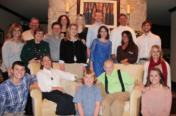
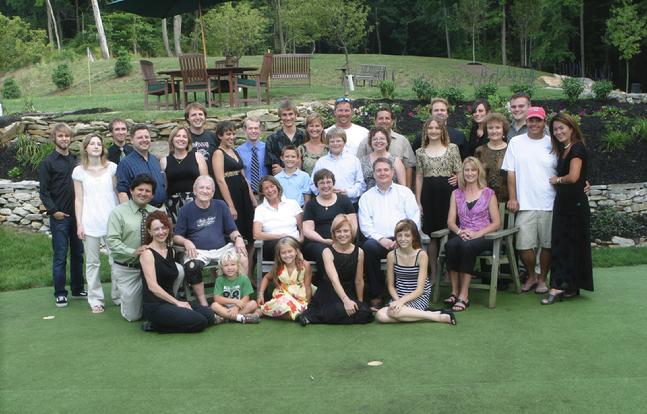
John's Extended Family - All In His Corner
JOHN'S EXTENDED FAMILY - ALL IN HIS CORNER
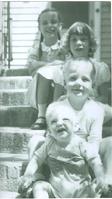
Nancy Beth Jim John 1948
NANCY BETH JIM AND JOHN 1949
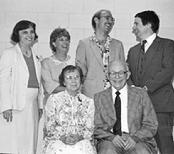
JOHN'S FAMILY NANCY BETH JOHN AND JIM PARENTS 1985
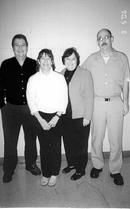
JIM BETH NANCY JOHN 2006
RULE OF LAW
In 1965, I was an idealistic graduate student. It was an exciting time with Michael Harrington's culture of poverty, the beginning of the Welfare Rights Movement, the civil Rights Movement and the dark cloud of Viet Nam as a back drop. The rights of the individual were magnified by these MOVEMENTS AND CHILDREN OF THE 60S looked to the Federal Government to define, bestow and preserve the same. An activist court was cheered and legislation to regulate human behavior was warmly welcomed. Bobby Kennedy's pursuit of the scoundrels of organized crime would remove a cancer from our country. Rico, conspiracy and mandatory minimums were on their way.
Forty years later I still strive to understand the individual's relationship to the state and how there can be a relationship that maintains freedom through the "Rule of Law". Waves of nausea now overcome me when I hear the phrase.
We now have one in every 30 citizens interfacing with the criminal justice complex. Rural communities hope there will be a need for more prisons and vie for them to be built in their community. Prisons are considered economic development. Many federal, State and Local Government jobs are dependent on the growth of our prison population. As more and more men and women are interfacing with the court system, the rule of law is a labyrinth of conflict and contradiction.
This contract between the governed and the state becomes unfathomable. Just as unfathomable is some consensus about what individual rights are. Case law piles on in volumes, and contradictory and minutely parsed decisions leave defendants without a clear understanding of process. Additionally they are required to use the services of an army of attorneys and advocates of various abilities and ethics. The financial resources of their families are sucked into the black hole of our criminal justice system.
If forfeitable assets are part of the bounty of the state, defense attorneys must defend their clients by walking on eggs, fearful that they may also be prosecuted. This further compromises the rights of the defendant. Many defendants must make plea agreements to things they knew little or nothing about because they have no resources. Even those with ample resources plea to avoid the almost certain conviction, and harsher sentence. Grand Juries are now used to investigate, rather than to decide if there is probable cause to indict.
Split decisions with carefully parsed nuances send hopes and money into this abyss. It must be noted that each individual caught in this web has children, parents, brothers and sisters who love them and are also disillusioned, confounded, and perhaps bitter about resources expended on a system that is so confounding yet has the power to take away the future of so many families.
How did we become so fearful of freedom that we have insisted on laws that criminalize so much human behavior and even thought? We now routinely convict people of crimes that never took place, in places the defendant has never been, with people they do not know and incidentally, the criminal act was instigated by law enforcement. The rest of the world disdains us and developing countries reject our rule of law. We investigate people who have not broken the law to prevent lawlessness. Our law enforcement is becoming lawless. Our rule of law is too voluminous and therefore arbitrary. Even the language, War on Crime, belies the rule of law. Our justice system uses the metaphors of war, and the object is the citizens whose part of the covenant is to give consent.
Brilliant trial and appellate attorneys arguing cases and judges deciding them are thrilling to read and even more so to watch. Their memory and critical thought is as sharp and shining as a mirror shattering. To me it is also as frightening as it would be to walk bare foot across the broken glass.
As I watch Justice Bryer and Justice Scalia have conversations about decisions and interpretations, I long for something more absolute. Something more absolute would be language that is clear, simple and true. How can a man's life and liberty depend on nuances culled from thousands and thousands of pages of case law with the reasonable possibility of a single sentence or concept on one of those pages becoming determinative. Too much law turns "Rule of Law" into rule of men.
What would Aristotle think of our rule of law? What would our founding fathers see? We have constant imposition and enforcement of arbitrary and restrictive values imposed on us by an over active legislative branch. These are interpreted and judged by a judiciary system that seems to be will aware of the fact that the governed can no longer know the rules of the covenant they are part of. I just fear for our freedoms.
I know there is logic and order in the process, but the sheer magnitude and complexity of the possibilities invites subjectivity.